Tuesday, January 15, 2013

Passion

Author: Daniel Flaquinti - 100393621
          
          When I was a young child I would always be creating and building different things. For example I had a toy play set that contained a plastic road and buildings. The roads would interlock, allowing me to create different layouts of cities. I also had a marble play set that allowed me to create different designs for the marble to run through (I wonder if you can guess which game I made must have had a massive influence from this toy). 


I had something similar to this as a child 


         Basically what I am trying to say is that I have always loved to be creative and think outside the box. I was never really satisfied with a simple toy that told you how to use it; I always wanted to create something different. I can even remember that at a young age I wanted to be a scientist / inventor when I grew up, so I could continually come up with new and cool ideas.

        As time went on I eventually started playing video games. I first games I played were on the Nintendo Entertainment System. These included titles such as Super Mario Bros and Tetris. I was captivated by the interactivity that games offered. They allowed me to explore their world and find the solution to problems. I became captivated by this and started shifting my focus to be more video game related. I was also gaining and interest with working with computers and technology in general. It was not until high school that I made the decision to go pursue video game development as a career. It combined my love for being creative, video games and technology into come comprehensive subject.

         Some of the games that really inspired me would be adventure style games, specifically Kirby’s Nightmare in Dreamland and Metroid Prime. The Kirby game showed me exploration and experimentation. Many of the levels contain secret places that could only be accessible by looking in hidden areas and thinking unconventionally. I was also able to experiment with Kirby’s many different types of powers. I was able to discover more uses for them by using them in different places. For example the laser ability will bounce off curved slops in the ice areas. Metroid Prime showed me how mood and atmosphere could effect a games presentation. The graphical fidelity and art style are still striking to this day. I remember always imagining what kind of different environments, monsters or discoveries lay around the next door. One part that sticks out to me was when I first entered the snow area in the game. It was so different than anywhere else I had explored and contained new enemies that I would have to learn how to defeat. I was also showed to some more clever uses of exploration and hidden secrets.
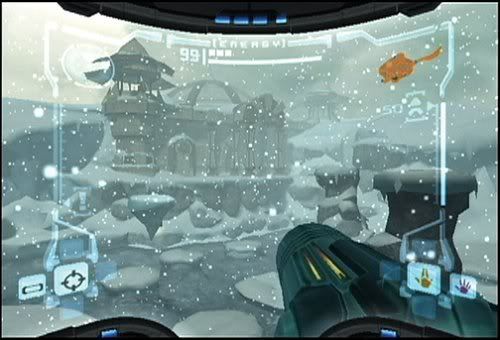

This area blew my mind


         I can safely say that I have made the right choice in choosing video game development as my career. Through this school I have learned to create different experiences for people to enjoy. One of the other factors that fuels my passion is knowing that what I am working on will be played and hopefully enjoyed by someone. That the work and dedication I pour into a project will eventually show through when someone plays the game. It was quiet rewarding during events like the GameCon as I got to see different players learn and explore the world I created. It was very rewarding to see the player get a sense of excitement and intrigue when they found some of the secret areas that I had hidden in the levels. I am now able to create my own games in which people can experimented and discover. It is truly rewarding to see your creation come to life and be enjoyed by others.   

Sunday, April 15, 2012

Final Post for Solitude GX

        The Game Con was a great success! I was a little sad that we did not win one of the prizes, but was still very happy with the feedback we got from the game. A lot of the people who played the game really enjoyed it. It seemed that once someone started to play our game, they kept playing for a couple of levels. We even hand players who got to the final boss! This meant that the game was able to hold their attention and that they were enjoying playing it. Players also got to try our older games, which helped show the team’s progression over the years.

        Overall I believe the levels in our latest game have been well designed. Everyone who played it knew exactly how to traverse the levels and what the objectives are. This was desfantyl made possible with the aid of iteration and playtesting. This shows that we have defiantly grown in terms of level designing. Over the summer I might even work on adding more levels, but I’ll have to see (most of the time things come up and extra projects get delayed). Overall I am very happy how the game came out and am looking forward to a nice and relaxing summer.    

Saturday, April 7, 2012

Game Complete!

        As of now our game is 100% complete. We were able to get the last component, dead-reckoning, working in our game. Currently, a lot of our assignments are also almost complete. For purposes of the post-mortem presentation, I had to go take screenshots of very old builds of our game. It was astonishing to see just how far our game has come in terms of being visual and functional. I personally have learned a lot about game design though making this game. I learned when designing the levels and puzzles, I need to give some guidance to the player to help them understand what to do. Without this, players would get lost and frustrated, something no designer wants. For example, the puzzle with the buttons, I had simply put a faded black line, thinking the players would eventually get it. Unfortunately, I was thinking as a designer, not from the player’s perspective. When the player is first introduced to the puzzle, they have no idea what the buttons do, how many there are, that they need to be pushed in a certain order, etc. I had to start thinking from the player’s perspective in order to make the puzzle simple and accessible to all who play it. By adding the bright yellow arrows as well as a darker line, one would think that I am making the puzzle way to obvious, but actually it was necessary to do so. It made it easier for the player to not only discover the order, but to figure out how the entire puzzle worked. 


Its come a long way.

Saturday, March 31, 2012

Nearing the End

        We are coming to the end of the development for our game. So far I am very happy how it has come out. Many of the fixes we are currently adding to our game are visual ones. Once big addition was the inclusion of bump mapping. This is not being done in real time, but through baking the textures in Maya. This helps the game look more realistic as well as visually appealing. This also took design choices as some of the baking caused the textures to go dark. Some adjustments had to be made in order to keep the player from getting lost in the darkness. 

        As for the difficulty of the game, I feel we have hit a good balance, as I had my younger sister play the game and she was able to get to the last level without guidance (she mostly plays games such as Angry Birds and Bejeweled, so she is not an experienced gamer). A few last fixes includes added more of a spectacle to the victory screen, to help visually reward the player. Some arrows were also added in some levels to further convey the proper path. We are also ironing out any glitches that show their heads, such as one that caused the timer to keep counting down after the goal was reached. I am very confident that the game will be ready for the Level Up event on Monday, I hope people will enjoy playing the game as much as I have crafting it.          

Sunday, March 25, 2012

Playtesting Helps

With the Lightbox event coming up soon, we are trying to get our game polished as fast as we can. Luckily, we are currently at the playtesting stage and are trying to tweak the game so that it is as good as it can be. Some of the suggestions we had received hand to do with navigation, feedback and sound. There still seemed to be some parts of the levels that did not convey to the player where to go next. Some arrows were added to help guide the player though these parts. After a player finishes a level, the victory theme plays and the next level loads immediately. A suggestion we got was to congratulate the player more, to make them feel then just accomplished something. Currently, we have created a screen that will fade in that will not only congratulate the player, but will compare their time to the times of other players. 

        Lastly, we were given more suggestions about the sound of the game. Currently our games does have sound effects, but not that many of them. Currently, it is very difficult to find sounds as many online sources require money for their sound effects. Hopefully we will be able to find more sound effect and add them into the game to help the levels feel more alive. So are cracking noises have been added to the teeter totter and the AI’s give off a creepy computer sound when you get close to them. With about a week to go we will not be able to fix all the problems with our game, but we should be able to get it very close to fully complete.   

This now makes noise when you roll on it. 
            

Saturday, March 17, 2012

Helping the Player

       For this week, we had met with our professors to get their option on our game. Besides a few suggestions with shaders, one of the biggest issues they found was that our game did not guide / teach the player enough. At times they felt lost and did not know where to go when navigating the levels. Some of their suggestions were to add a kind of arrow prompt that would tell the player where to go next. We felt this was helping the play too much as it would take away a large portion of the challenge. Instead we are going to use small cut-scene at key points to help show the player where to go. 

      We are also going to raise the height of the camera so the player gets more of a view of the level. This means they will be able to see obstacles ahead and make navigation easier. We will also add a few arrows in the geometry and textures to guide the player, but not be too explicit. Lastly we will create a type of tutorial level that will teach the player the basics in a controlled environment. We felt that the first level might a bit difficult for new players to get use to the game, so the tutorial level will ease them into it so they are conformable and gain confidence to get though the levels.      

An example of small arrows to show the player the way to go.

Sunday, March 11, 2012

Paper Prototype

For this week I will explain how my group went about converting our game into a paper prototype. Unfortunately for us, our game was not the easiest one to try and convert into paper. Since it was physics based, we found in challenging to translate that mechanic into paper form. At first we were going to have some kind of formula for the player to figure out how many spaces they have moved based on the speed. This method was much too complicated for the paper prototype. Fortunately, I feel we have found a perfect mechanic for the paper game, that captures the physics based mechanic. For the game board, we drew an outline of a type of level that would be in our game. We include some hazards such as sharp curves, crushers, exploding rocks and moving platforms. The track was then divided up into different sections, placing each section into its own zone. This is similar to how we divided up the computer games levels for the respawning. Each section has its own attributes associated with it. The attributes will explain what the player needs to roll in order to get past that part of the level. The player can choose “fast”, “medium”, or “slow”. If it is a curved piece, the attributes might be “fast = 4”, “medium = 2” and “slow = 1”. This means if the player wished to pass that part going fast, they must roll a 4 or higher. Failing to do so, means they must restart that section over again. 

Furthermore, for every roll the player makes they gain “time tiles”. They get three if they roll slow, two if they roll medium and one if they roll fast. This will incline the player to risk going fast, hoping that they do not fail as they will have to gain more time tiles. The player who gets to the end of the track with the least amount of time titles wins. I feel this accurately reflects the strategy of the real game as player can risk going fast, meaning they might require multiple attempts, or go slow, but waste a lot of time.